
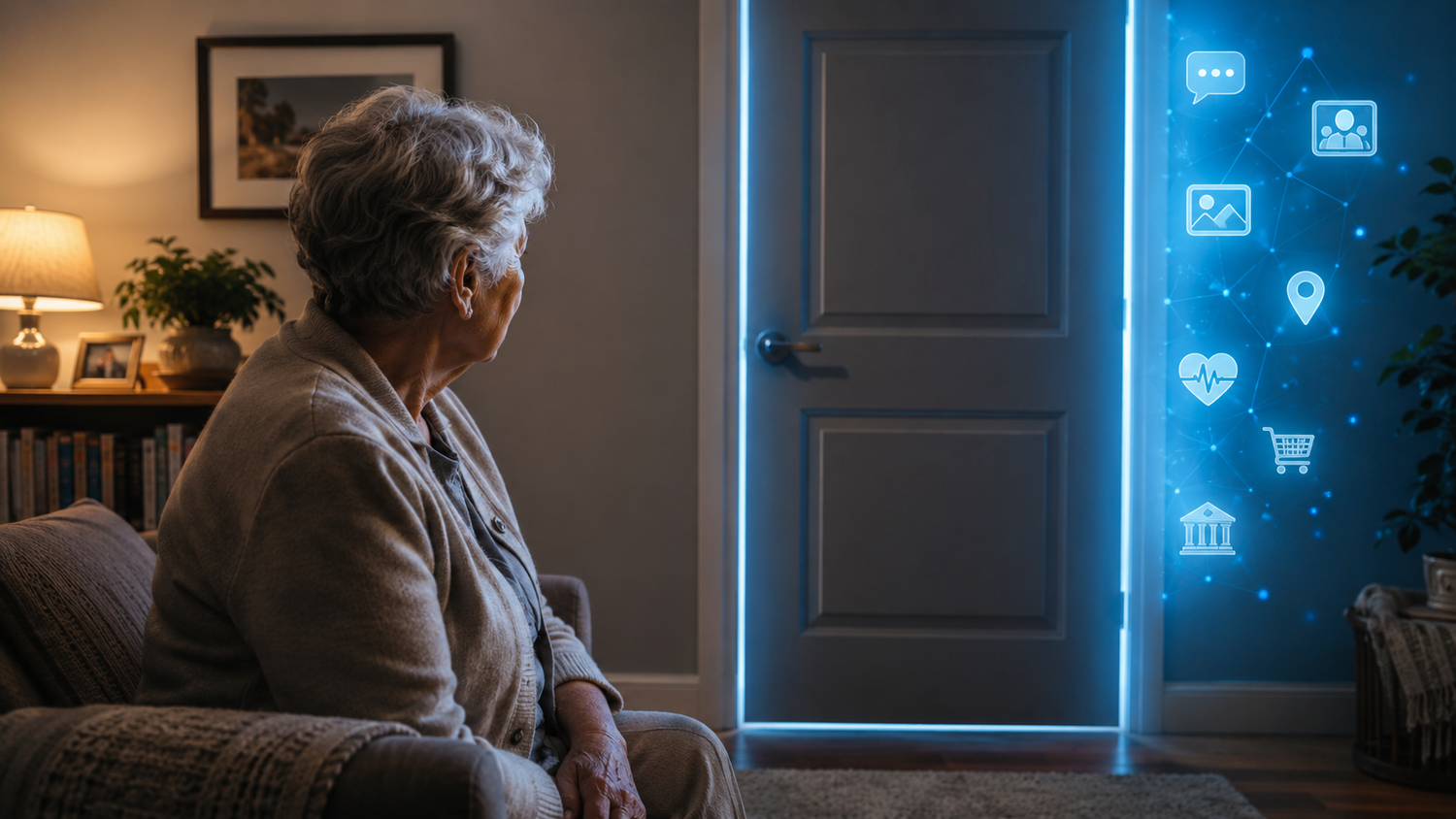
Ten million older people in Germany, and almost a million aged 65 and over in Austria, do not use a smartphone. For them, a part of life is passing them by. Yet there are good, easy-to-use devices on the market that could bridge the digital divide simply and effortlessly.
Whilst ‘digital natives’ (i.e. those who have grown up with smartphones and the like) take it for granted that they can handle their shopping, banking and appointments with a swipe of a finger, and even start or end romantic relationships on their smartphones, the older generation is, in some cases, finding the door closed to them.
In 2026, only 53 per cent of people aged 65 and over will use a smartphone. This is according to a recent bitkom study in Germany. This figure is alarming in that the smartphone has become the central tool for social participation for most people: WhatsApp, Instagram, TikTok, X, YouTube, etc. Communication takes place on these channels nowadays.
“Family communication often takes place via WhatsApp these days. If parents or grandparents don’t own a smartphone, they are cut off from the latest family gossip; they don’t see videos of their grandchild or the latest holiday photos of the children swimming in the sea. For those without a smartphone, a part of life passes them by,” says Eveline Pupeter, Managing Director of the European smartphone company emporia based in Linz.
Added to this are apps such as ID Austria, Finanz Online, the digital e-Card, online prescriptions for the chemist and much more. Without a smartphone, many everyday tasks become a hassle. And sometimes more expensive too. Cheap train tickets, for example, are often only available if you buy them online.
More than just a fear of the unknown
But why do millions of people in Germany and Austria not use a smartphone? What is it that stops them from opening the door to the digital world?
The difficulties are manifold and often start with the hardware. Diminishing eyesight makes small text hard to read. Fine motor skills make precise typing on glass surfaces a test of patience. And their hearing was better 30 years ago than it is today.
Yet the real hurdle is cognitive in nature: the logical structure of operating systems, nested menus and technical terminology in English (“cloud”, “account”, “update”) often feel like a foreign language. Added to this is the fear of security risks such as phishing or data loss, which deters many older people from using functions like online banking.
Special solutions for digital newcomers
The market has responded. Manufacturers such as emporia offer special smartphones for seniors with simple menu navigation, large control panels, hearing aid compatibility and easy-to-read fonts.
Yet these smartphones from Linz are by no means stigmatising or old-fashioned. emporia smartphones run on the latest version of Android; they feature a top-of-the-range camera, NFC, fingerprint recognition, voice-activated text input, etc., and they have a so-called ‘Panic’ button, which can be used both as an emergency call button and to access Google Assistant.
On top of that, the emporiaCOACH is also pre-installed. This is a free training programme on the smartphone that teaches the basics of the digital world in a few simple steps in an easy-to-understand way.
“We must succeed in closing the digital divide. This is a question of ethics that applies just as much in the digital world as it does in the analogue one,” says Eveline Pupeter.


Leave a comment
This site is protected by hCaptcha and the hCaptcha Privacy Policy and Terms of Service apply.