Basics: What does a smartphone need to operate?
Hardware and operating system
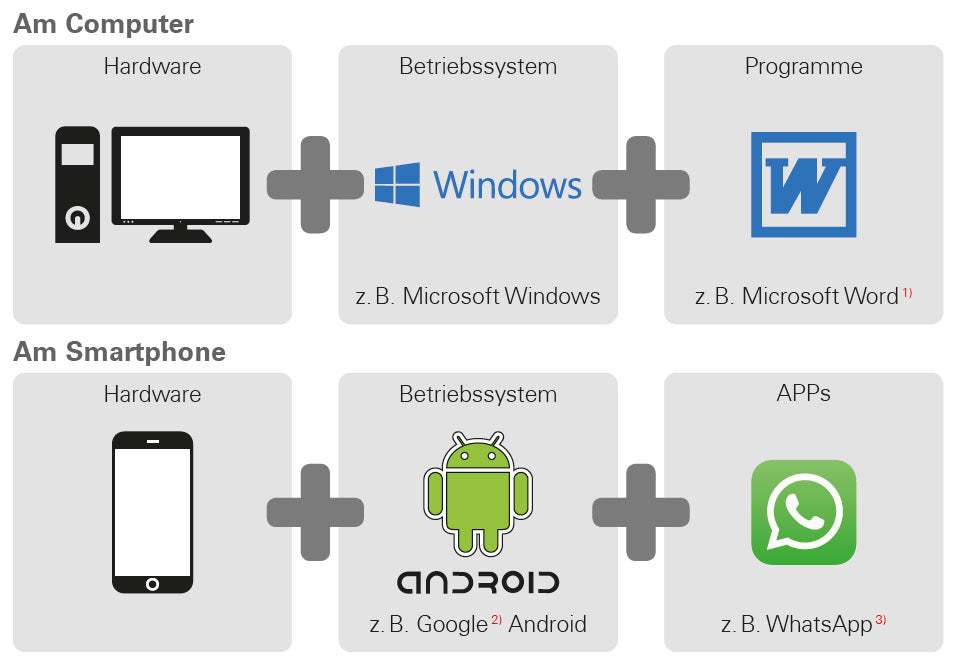
If you have ever used a computer, you know that a PC consists of more than just hardware, i.e. the tangible parts. Every computer also has an operating system installed, which is basic software that enables the device to function in the first place. The best-known operating systems for PCs are Microsoft Windows and Apple OS X.
Based on the operating system, additional programmes can then be installed that are specialised for various tasks, such as word processing, graphics creation or communication.
The functionality of a smartphone can be understood in a similar way, because a smartphone is nothing more than a compact pocket computer. Every smartphone consists of hardware on which an operating system is installed.
In the smartphone world, these programmes are called apps. The most common operating systems for smartphones are Android and iOS. iOS is used exclusively for Apple devices, such as the iPhone. Android, on the other hand, is an open operating system and is used for many devices, making it the most widely used operating system.
Tariff and network operator
Now your smartphone is ready to use with its hardware, operating system and apps. However, in order to make calls and use the internet, you need a tariff from a network operator. You can think of it like a car: even a brand new car with a full tank of fuel cannot drive if it is standing in the middle of the forest. It needs roads and paths.
The same applies to a telephone: it needs a network operator's radio network to transmit phone calls and data.